Introduction: Why Should You Care?
Imagine this:
You send money internationally and wait 3–5 days.
You pay high fees just to move your own money.
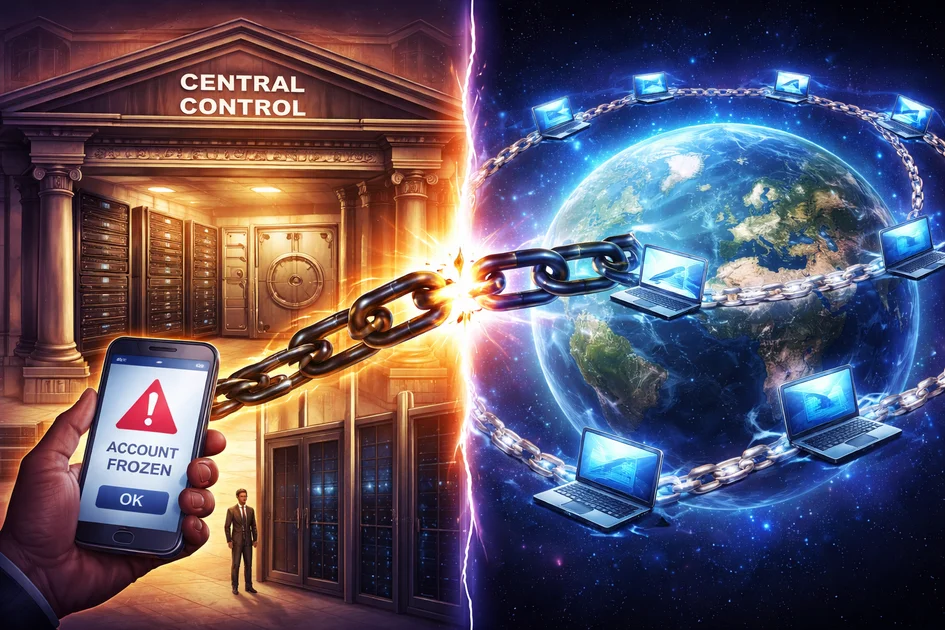
Your bank freezes your account because you bought coffee in a different city.
It feels normal, because that’s how things have always worked.
But here’s the truth:
All digital systems today depend on someone’s database.
A company controls your money.
Another controls your data.
Another decides whether your transaction is “allowed.”
Blockchain changes that.
Instead of trusting one company’s server, blockchain uses thousands of computers around the world to agree on who owns what, without anyone being in charge.
No headquarters.
No central boss.
Just math, incentives, and agreement.
That’s powerful.
Part 1 - The Birth of Blockchain (2009)
Bitcoin and the Mystery of Satoshi Nakamoto
In 2009, someone (or a group) named Satoshi Nakamoto launched Bitcoin, then disappeared.
No CEO.
No company.
No marketing campaign.
Just a whitepaper and code.
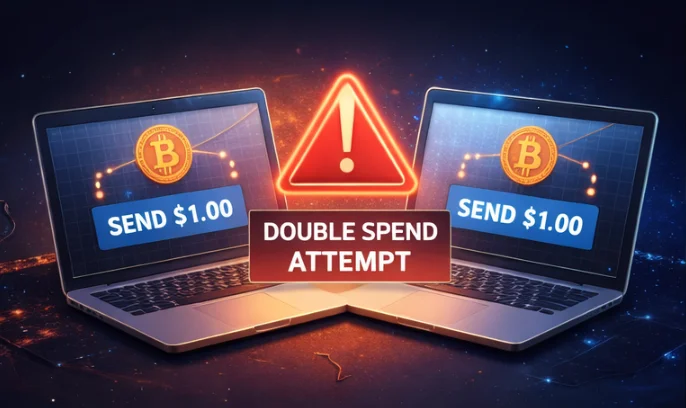
Before Bitcoin, digital money had a big problem:
If you send a digital file, you can copy it.
But money cannot be copied.
So how do you stop someone from spending the same $1 twice without a bank checking everything?
Bitcoin’s Breakthrough
Bitcoin solved this using:
Thousands of computers (called nodes)
A shared public ledger
A reward system for honesty
Here’s how it works (simplified):
You send Bitcoin.
Your transaction is broadcast to the network.
Special computers (miners) group transactions into a block.
They compete to solve a puzzle.
The winner adds the block and earns new Bitcoin.
Everyone verifies it.
No single computer is trusted.
Everyone checks everyone else.
This system is called Proof-of-Work.
Part 2 - Smart Contracts and Ethereum (2015)
In 2015, a 19-year-old programmer named Vitalik Buterin had a bigger idea.
Bitcoin was like a calculator:
It only tracked money.
Ethereum became like a computer:
It could run programs.
These programs are called smart contracts.
They automatically execute rules.
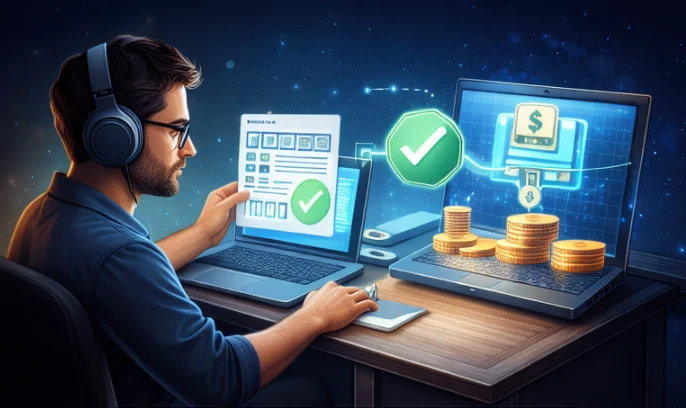
But there was a problem.
Everything on Ethereum is public.
Your transactions.
Your balances.
Your activity.
Forever.
That transparency builds trust, but it also destroys privacy.
Part 3 - The Rise of Efficient Blockchains
Bitcoin worked, but used massive energy.
Ethereum was powerful, but expensive during busy times.
Newer platforms tried to fix this.
Cardano and Proof-of-Stake
Instead of burning electricity, Cardano introduced Proof-of-Stake.

The Difference:
Proof-of-Work: Compete using electricity.
Proof-of-Stake: Lock funds as a deposit. If you cheat, you lose your stake.
Benefits:
99% less energy
Faster transactions
Lower costs
Other networks also appeared:
Solana - focused on speed
Polkadot - focused on connecting blockchains
Avalanche - focused on fast finality
Each improved something.
But one big issue remained:
Privacy.
Part 4 - The Privacy Revolution: Midnight
Blockchains need transparency so everyone can verify transactions.
But the real world needs privacy.
Medical records can’t be public.
Trade secrets can’t be visible.
Personal identity data must stay protected.
This is where Midnight introduces something revolutionary:
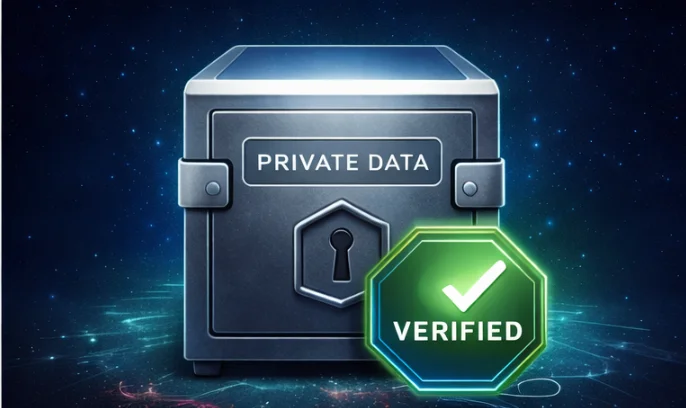
Zero-Knowledge Proofs
This sounds complicated, but it’s actually simple.
It allows you to:
Prove something is true
Without revealing the information itself
Examples:
Prove you are over 18 without revealing your birthdate.
Prove you have enough money without showing your balance.
Prove compliance without exposing customer data.
Midnight’s philosophy:
Private by default. Transparent by choice.
This is not about hiding illegal activity.
It’s about making blockchain usable for:
Healthcare
Finance
Enterprises
Governments
Everyday users
Because 99% of real-world data legally requires privacy.
Why This Evolution Matters
We went from:
Bitcoin: “What if money didn’t need banks?”
Ethereum: “What if money could run programs?”
Cardano & others: “What if blockchain was efficient?”
Midnight: “What if privacy and transparency worked together?”
This changes everything.
Imagine:
Sending money globally for pennies.
Controlling your own digital identity.
Proving compliance without exposing data.
Financial systems that cannot be arbitrarily frozen.
This isn’t theory.
It’s already happening.
Replies1
Discussion
Join the discussion
Sign in with Google to reply. You stay on this article while you sign in.