Introduction: Staking Is Participation, Not Speculation
When people hear “staking,” they often think it’s complicated, technical, or risky.
On Cardano, staking is none of those things.
Staking ADA is simply how Cardano stays secure, decentralized, and sustainable. At the same time, it allows ADA holders to earn rewards while keeping full control of their funds.
You don’t need special hardware.
You don’t need to lock your ADA.
You don’t need to trust a third party.
You just need a wallet and a few minutes.
What Does “Stake” Mean on Cardano?
ADA held on the Cardano network represents a stake in the system. The more ADA you hold, the larger your stake.
This stake plays a fundamental role in how Cardano works.
Cardano uses a proof-of-stake protocol called Ouroboros. Instead of mining, the network selects validators based on the amount of ADA that is staked or delegated.
In simple terms:
ADA represents participation
Participation secures the network
Security is rewarded

Two Ways to Earn Staking Rewards
There are two ways an ADA holder can earn rewards:
1. Delegate Your Stake (Most Common)
Delegation means assigning your stake to a stake pool operated by someone else.
This is the option most people choose because:
It requires no technical skills
Your ADA never leaves your wallet
You can change pools at any time
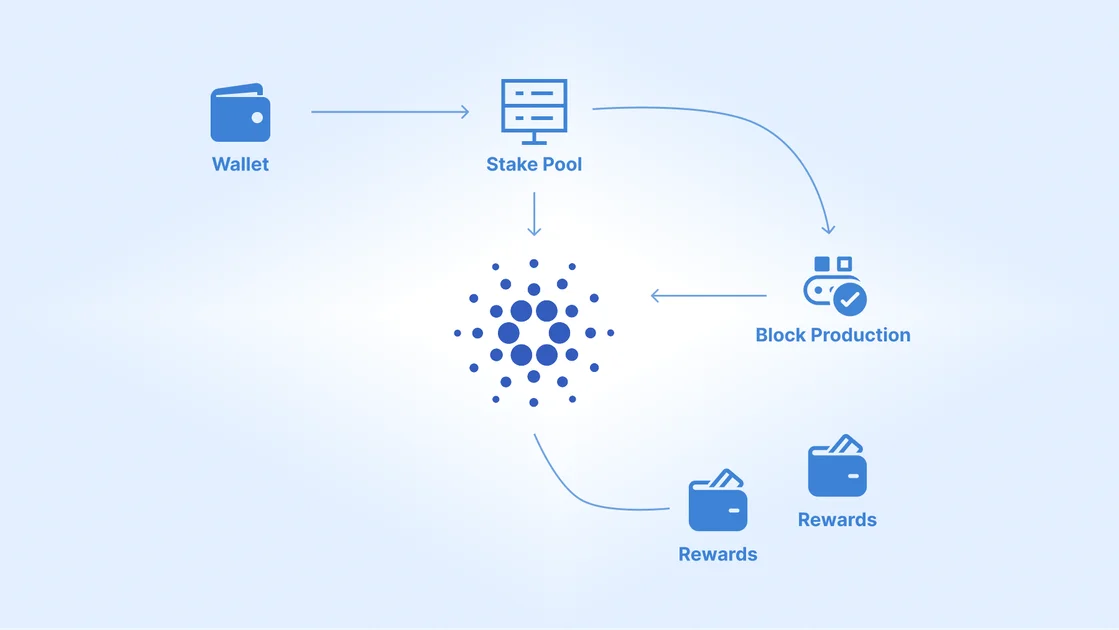
By delegating, you help a stake pool participate in block production, and rewards are shared among everyone who delegated to that pool.
2. Run Your Own Stake Pool
Running a stake pool means operating a node yourself. This requires:
Technical knowledge
Reliable infrastructure
Time and maintenance
While it can be rewarding, it’s not necessary for most users. Delegation already allows anyone to participate fully in the network.
How Delegation Works (In Simple Terms)
The Ouroboros protocol selects which stake pool gets to produce the next block based largely on how much stake is delegated to it (up to an optimal limit).
When a pool produces blocks:
It earns rewards
Rewards are distributed to delegators
The network remains decentralized and secure
The more people stake and delegate responsibly, the healthier Cardano becomes.
Why Does Cardano Use Incentives?
Staking rewards are not a bonus, they are a design choice.
Cardano’s incentive mechanism is based on scientific research combining:
Mathematics
Economic theory
Game theory
The goal is to ensure:
Long-term network security
Honest participation
Decentralization over time
By rewarding good behavior (staking and delegation), the network naturally aligns individual incentives with the health of the ecosystem.
Why Stake ADA Specifically?
Staking exists on many blockchains, but Cardano stands out for several reasons:
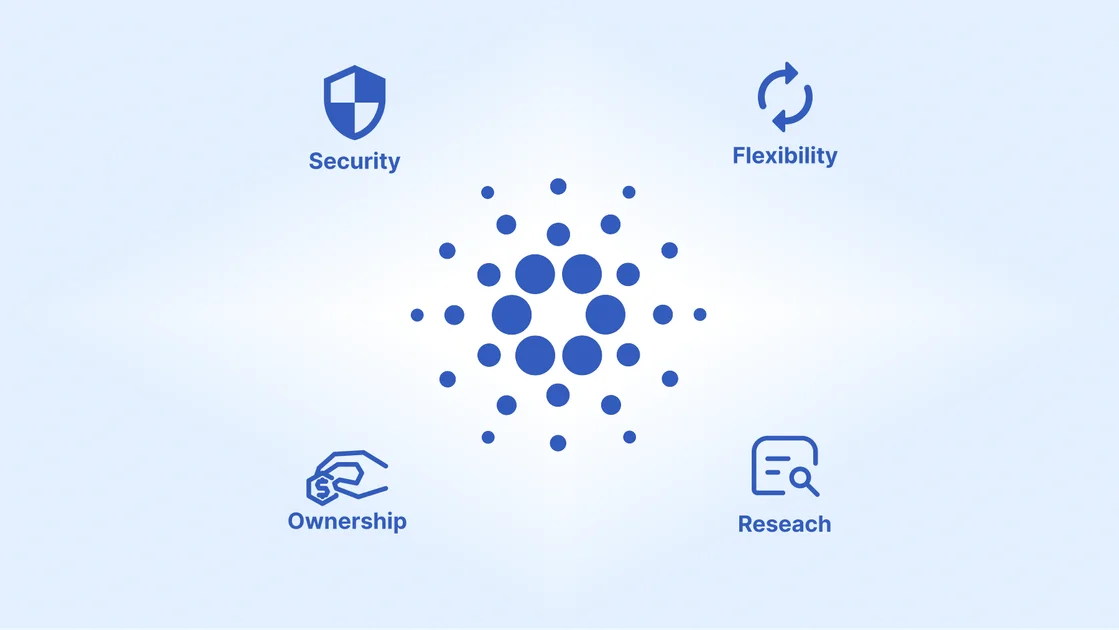
🔹 Your ADA Is Never Locked
You can spend or move your ADA at any time. Staking is automatic and flexible.
🔹 No Slashing
Cardano does not punish delegators for pool mistakes. Your funds are safe.
🔹 Non-Custodial
You keep full control of your wallet and private keys.
🔹 Proven, Research-Based Design
Ouroboros is one of the first proof-of-stake protocols backed by peer-reviewed research.
Staking ADA is designed for everyday users, not just technical experts.
How to Start Staking ADA (Step by Step)
Getting started is easier than most people expect.
Step 1: Choose a Cardano Wallet
Popular options include:
Lace
Yoroi
Eternl
Daedalus
Step 2: Fund Your Wallet with ADA
Transfer ADA from an exchange or another wallet.
Step 3: Choose a Stake Pool
Inside the wallet, browse stake pools and consider:
Pool performance
Fees
Saturation level
Operator transparency
Step 4: Delegate
Confirm delegation with a small transaction fee.
That’s it.
Rewards are automatically distributed every epoch (about 5 days).
Staking Is More Than Rewards
Staking ADA is not just about earning passive income.
It is about:
Supporting decentralization
Strengthening network security
Participating in Cardano’s governance-ready future
Aligning yourself with a long-term ecosystem
Every delegated wallet helps Cardano remain resilient and independent.
Final Thoughts
Staking ADA is one of the simplest and most meaningful ways to participate in Cardano.
You keep control.
You support the network.
You earn rewards.
Whether you’re new to blockchain or already building on Cardano, staking turns you from a passive holder into an active participant.
Cardano doesn’t ask you to trust, it asks you to participate.
Replies
Discussion
Join the discussion
Sign in with Google to reply. You stay on this article while you sign in.
No replies yet
Sign in with Google to start the discussion.